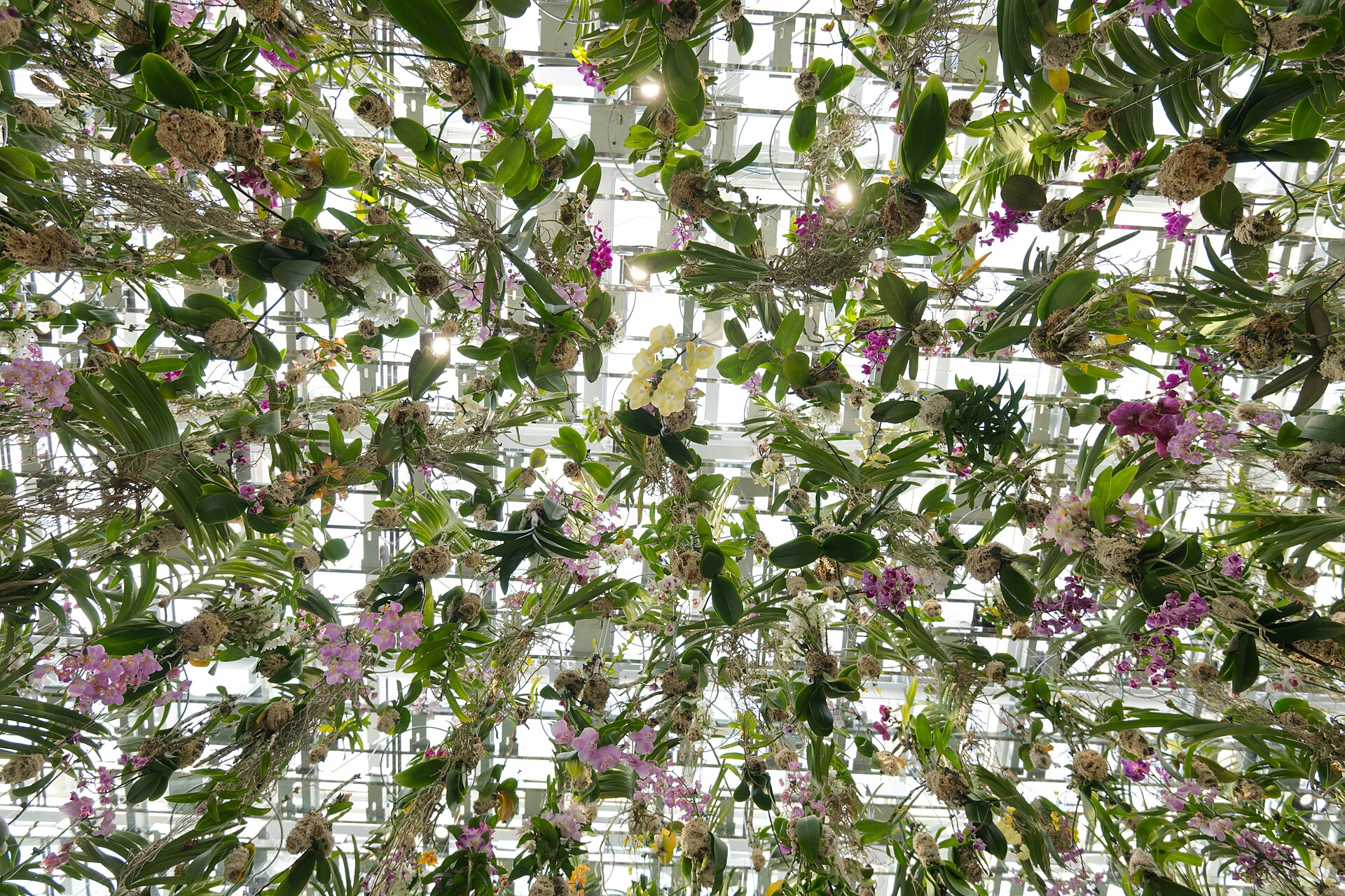
Every friend who visits Tokyo asks me the same question, usually within an hour of landing: “Borderless or Planets?” Tokyo has two permanent teamLab venues — teamLab Borderless in Azabudai Hills and teamLab Planets in Toyosu — and from the outside they look like the same museum with two names. They are not. They are two opposite ideas about what a space should do to you, they sit in two completely different corners of the city, and picking the wrong one for your travel style is an expensive mistake at ¥4,000-plus a ticket.
I’m Micchi. I live in Tokyo and work in property development. I’ve been through both venues multiple times — partly because I take every visiting friend, partly because I spend my working life around buildings, and these two do something buildings almost never get to do. Here’s the honest comparison, updated for how both venues actually stand in mid-2026.
The short answer
First trip to Tokyo, and you can only do one? Planets — since its January 2025 expansion it’s the bigger, more varied, more physical experience, and the one people talk about at dinner. Tight central-Tokyo itinerary, or you care about architecture and cities? Borderless — it sits inside Azabudai Hills, which is a destination in its own right, and its map-less concept is the more radical piece of spatial design. Traveling with kids who can handle water? Planets, decisively. Four or more days in Tokyo? Do both; they don’t overlap as much as you’d think.
Two opposite ideas of space
Let me talk about the space itself, because this is the real difference and no ticket site explains it.
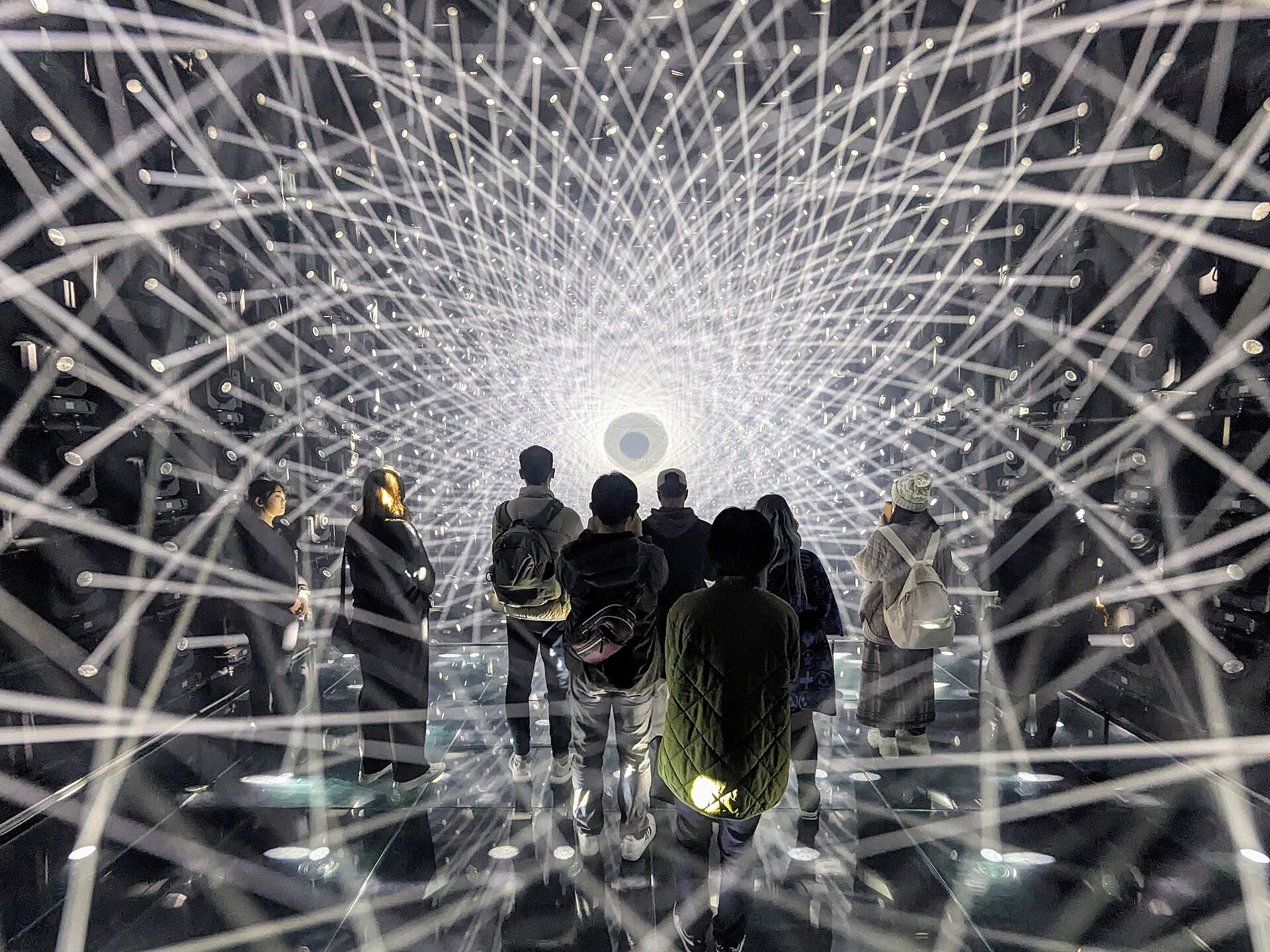
Borderless is a labyrinth designed to make you lose the map. There is no route, no floor plan, no “you are here.” Fifty-plus artworks refuse to stay in their rooms — they migrate down corridors, bleed into each other, and reorganize while you’re inside. You navigate by memory, rumor, and luck, which means two visitors never see the same museum. It’s the same trick a Japanese stroll garden plays — concealing the whole so you keep moving — executed with projectors instead of hedges.
Planets is a promenade — one fixed sequence you surrender to. You take off your shoes, you follow a single route, you wade through knee-deep water while koi made of light scatter around your legs, you end lying on your back under a dome of flowers. Architects call this a promenade architecturale: the building as a scripted journey. Planets scripts you completely — barefoot, wet to the knees, in the dark — and the surrender is the point.
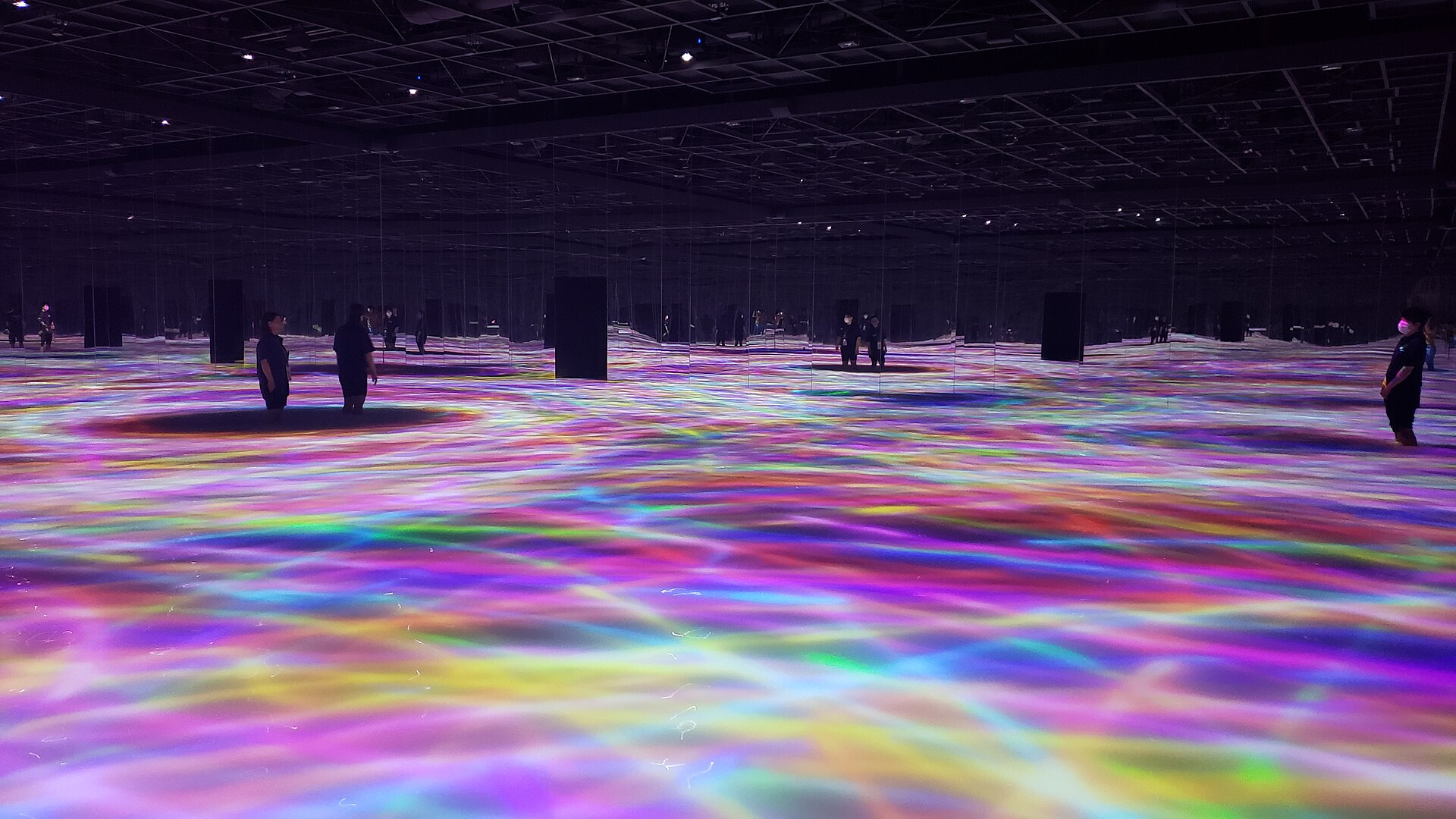
Neither venue is really a “museum” in the architectural sense. Both are black boxes where light does the work walls used to do. But one asks you to explore, and the other asks you to submit, and knowing which mood you want is 90% of choosing correctly.
What’s changed recently (and why 2026 is a good moment)
Planets roughly doubled in January 2025, adding some twenty works across three new zones — Athletics Forest (bouncing spheres, aerial climbing), Future Park (the drawing-comes-alive rooms kids lose their minds over), and a Catching and Collecting Forest where you hunt creatures with an app. Its run has been extended through the end of 2027, and a new water-area work, Body of Waves, arrived in July 2026. Borderless, meanwhile, is running a special exhibition through October 8, 2026 that reopens its Light Sculpture – Flow hall with two new series — the best reason in a while to go even if you saw Borderless in its old Odaiba incarnation.
Side by side
| teamLab Borderless | teamLab Planets | |
|---|---|---|
| Where | Azabudai Hills (Minato) | Toyosu (Koto) |
| Station | Kamiyacho, Hibiya Line — direct | Shin-Toyosu, Yurikamome — 1 min |
| Adult ticket (dynamic) | ~¥3,800–¥4,800 | from ~¥3,600, higher on weekends |
| Time inside | 2–3 hours | 3–4 hours since expansion |
| Concept | Map-less wandering | One immersive route |
| Barefoot / water | No | Yes — knee-deep |
| Best for | Design lovers, central itineraries | First-timers, families, photos |
| Crowd feel | Denser, dark-room queues | Timed flow, more breathing room |
Hours shift by season at both venues (Planets was running 8:00–22:00 as of this writing; Borderless roughly 10:00–21:00, with irregular closed days), so treat the official calendars as the source of truth, and note last entry is an hour before close.
The neighborhood question — this decides it for most people
Here’s the factor I weight more heavily than anything inside either venue: what your day looks like around the ticket.
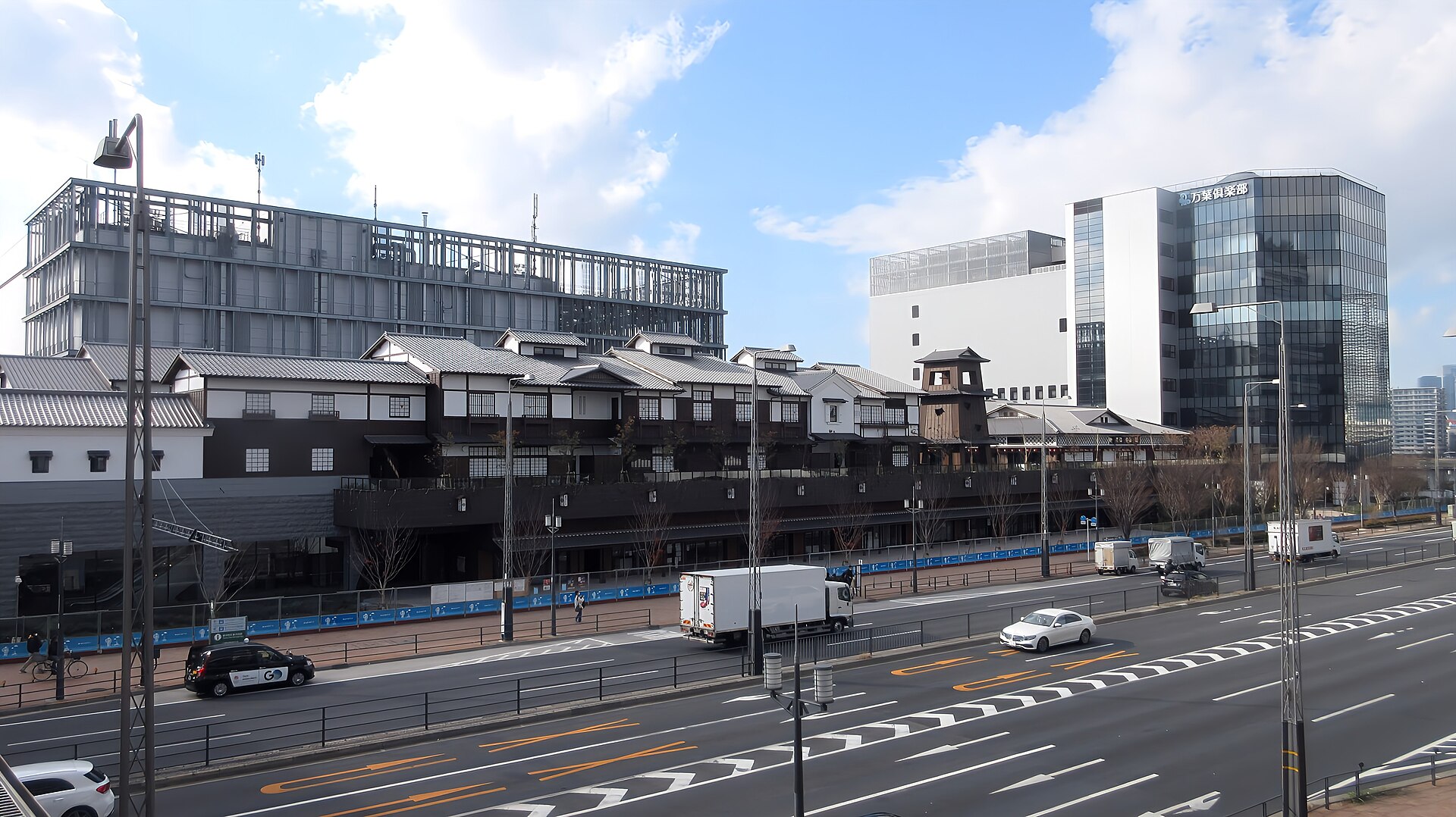
Borderless gives you an Azabudai Hills day. The museum sits in the basement of Garden Plaza B, inside Tokyo’s newest completed district — Heatherwick Studio’s walkable garden roofs, Japan’s tallest tower, a superb basement food hall, and Tokyo Tower ten minutes away on foot. I’ve written a full architect’s walking guide to Azabudai Hills; do that route in the afternoon, catch the ¥1,000 tower view from the 34th-floor cafe at golden hour, then take your evening teamLab slot. That’s one of the best single days in central Tokyo, and you never touch a train after arriving.
Planets gives you a Tokyo Bay day. Shin-Toyosu sits on the driverless Yurikamome loop, which is half the fun. Start early at Toyosu Market (the tuna business ends by mid-morning), soak at Senkyaku Banrai — the Edo-styled onsen complex next door with a free 8th-floor footbath and bay views — then take your Planets slot, and ride the Yurikamome over to Odaiba for Rainbow Bridge at dusk. It’s a completely different Tokyo from the Azabudai version: reclaimed land, big sky, big infrastructure. As someone who grew up on the other kind, I find it weirdly moving.
Who should book which
First-time visitors: Planets. The expansion tipped the scales — more variety, more physical, more “only in Tokyo” stories per yen.
Families: Planets on content — Future Park and the Athletics zones are built for kids — but go in clear-eyed: it means barefoot toddlers in knee-deep water, under-13s need an adult, and strollers park at the entrance. With very small children, Borderless is logistically gentler.
Couples: either, honestly. Planets for wading hand-in-hand through the water rooms; Borderless for dark, endless rooms plus a proper dinner upstairs in Azabudai afterward.
Architecture and design people: Borderless, and it’s not close. The map-less concept is the more interesting design experiment, and the Heatherwick district above your head is the other half of the ticket’s value.
Booking and practical tips
Where to buy tickets. Both venues sell direct, and both are also listed on resellers. If the official date picker is sold out for your dates, or you would rather check out in English, Klook lists both. Compare before you commit — the official site is sometimes cheaper. (Affiliate link: I earn a small commission if you book through it, at no extra cost to you. Disclosure.)
Book 2–3 weeks ahead for either venue — more for weekends, holidays, and blossom season. Both use dynamic pricing, so weekday slots are literally cheaper as well as quieter; the first slot of the morning is the least crowded at Borderless, while Planets is calmest in its first two and last two operating hours, with the crush around midday. Buy from the official teamLab ticket sites, or through Klook or GetYourGuide if you prefer English checkout — walk-up tickets carry a surcharge at Borderless and usually don’t exist at all, because dates sell out.
Dress for the venue. Planets means bare feet and knee-deep water: wear shorts or roll-ups (free rental shorts exist, XS–6L), skip tights, and if you’re in a skirt they’ll lend you a wrap for the mirrored floors. Borderless has mirrored floors too — same skirt advice — plus a lot of walking in the dark, so comfortable shoes. Lockers at Planets are small; travel light that day.
Small extras: at Borderless, the EN TEA HOUSE — where flowers bloom inside your teacup — charges a few hundred yen and is worth it as the calmest room in the building. At Planets, the Vegan Ramen UZU outpost by the entrance has held a Michelin Bib Gourmand for years and makes a better post-immersion meal than anything you’d stumble into nearby.
So: which one?
If I’m choosing for you sight unseen: Planets for your first Tokyo trip, Borderless if the city itself — its buildings, its neighborhoods, its newest experiment in Azabudai — is part of why you came. And if you can spare two half-days, do both in that order: Planets teaches you to surrender to a space, and Borderless then teaches you to get lost in one. As spatial education goes, ¥8,000 is a bargain.
Either way, if you land on Borderless — or you just want one of the best free afternoons in Tokyo attached to your ticket — start with my Azabudai Hills walking guide.
This post contains affiliate links. See our full disclosure.