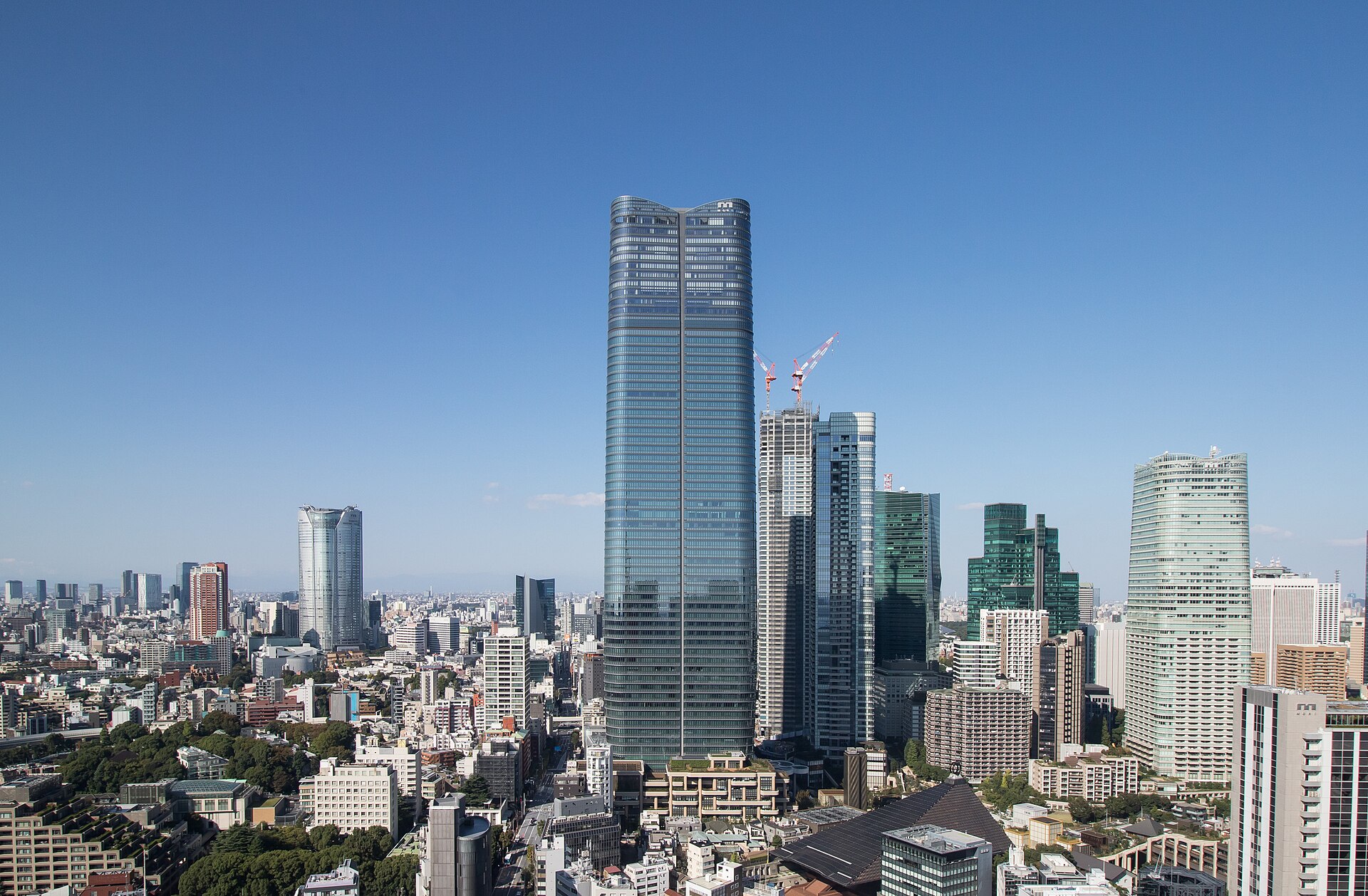
If my Omotesando walk is what happens when great architects take turns along one street for sixty years, Azabudai Hills is the opposite experiment: one developer, one masterplan, and thirty-five years of patient negotiation with roughly 300 separate landowners — all of it opening essentially at once in November 2023, with the final tower completed in October 2025. It is the newest finished piece of city in Tokyo, and it’s where I take visiting architect friends when they ask what Japanese urban development looks like right now.
I’m Micchi, and I should declare a bias up front: I work in urban development in Tokyo, so a project like this is my equivalent of a theme park. What follows is the route I actually walk, in the order I actually walk it, with the honest version of the one thing every guidebook gets wrong — the “free observation deck” that is no longer free.
What Azabudai Hills actually is
The official concept is “Modern Urban Village” — a strange phrase until you stand in the middle of it. On 8.1 hectares you get Japan’s tallest completed skyscraper, two more supertall residential towers, about 150 shops, a British international school, an Aman-affiliated hotel, a digital art museum — and threading through all of it, roughly 24,000 m² of planting with over 300 species, including a small orchard growing mandarins, blueberries, and apples in the middle of Minato ward.
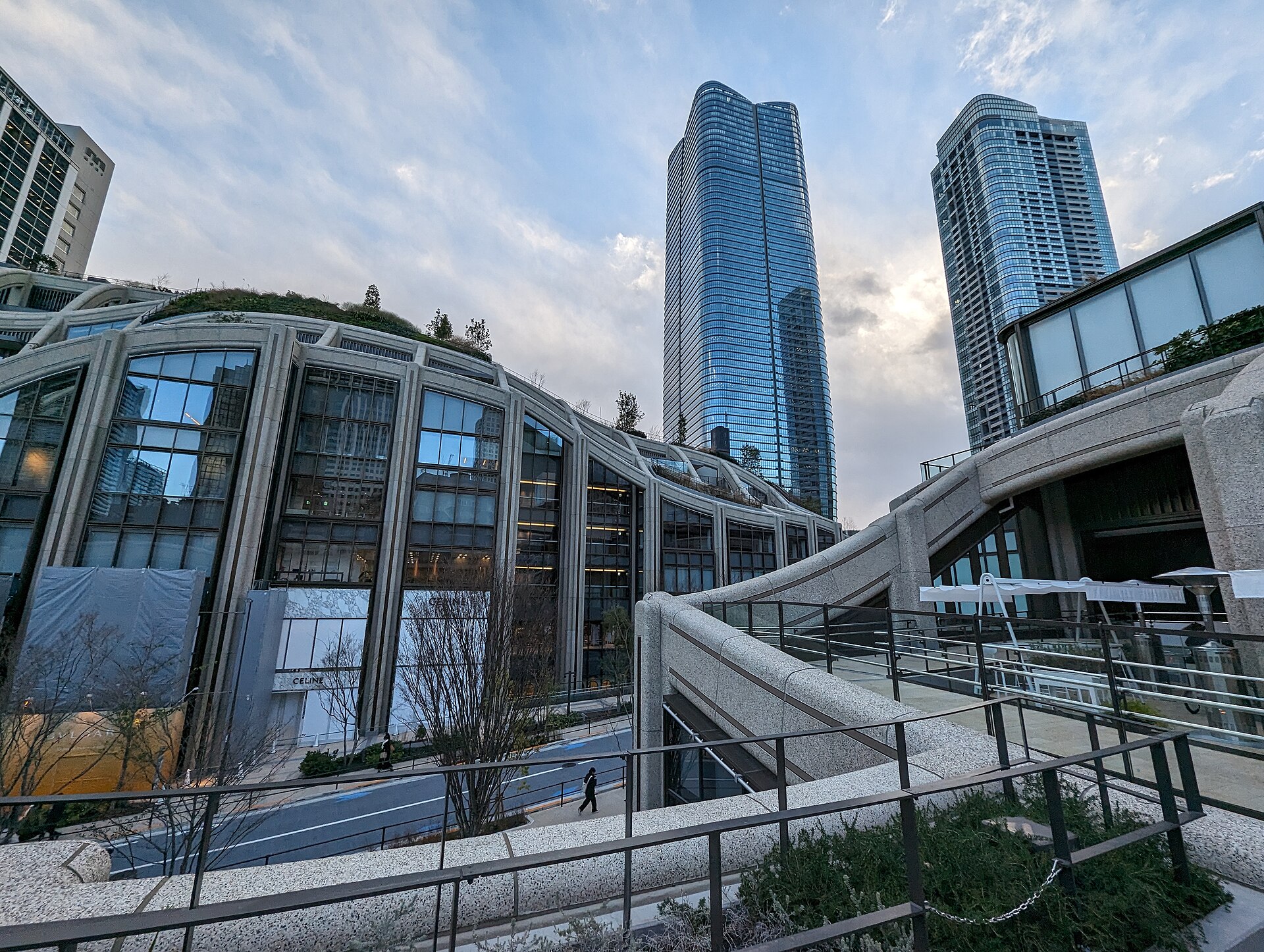
The idea, in one sentence: instead of towers standing on a plaza, the towers grow out of a garden, and the “village” is the low, hilly, walkable landscape between them. Thomas Heatherwick, who designed that landscape, calls it a “three-dimensional explorable landscape.” I’d put it more simply — it’s the only place in Tokyo where I regularly watch people lose their sense of which floor they’re on, outdoors, and enjoy it.
Before You Go
Getting there: Kamiyacho Station on the Hibiya Line (H05, Exit 5) connects directly into the complex — you can arrive without opening an umbrella. Roppongi-itchome on the Namboku Line is about 4 minutes away, now linked by a fully barrier-free underground passage called Central Walk, completed with the rest of the project in late 2025. Tokyo Tower is a 7–10 minute walk; Roppongi Hills about 15.
Cost: the grounds, the walkable garden roofs, and Central Green are free. teamLab Borderless is ticketed (more below), and the famous 33rd-floor view now effectively costs the price of a drink — I’ll explain.
Hours: most shops run 11:00–20:00, restaurants until around 23:00, and the basement Market roughly 10:00–20:00. The outdoor landscape is open all day, and it’s genuinely good at night.
Time needed: 2–3 hours for the complex itself. Add another 2–3 hours if you’re doing teamLab.
The Walk
1. Arrive underground, surface into the garden
Come via Kamiyacho Exit 5 and let the complex swallow you before you’ve seen its skyline. The arrival sequence is deliberate: retail concourse, escalators, and then suddenly you’re standing in a sloping garden with a 325-meter tower overhead. Easy to walk past: you’ve been walking on architecture the whole time — the “ground” here is almost all inhabited roof. Practical tip: resist the urge to navigate efficiently. The complex is designed for drift, and the signage assumes you’ll get pleasantly lost at least once. Budget for that.
2. Mori JP Tower — Pelli Clarke & Partners, 2023
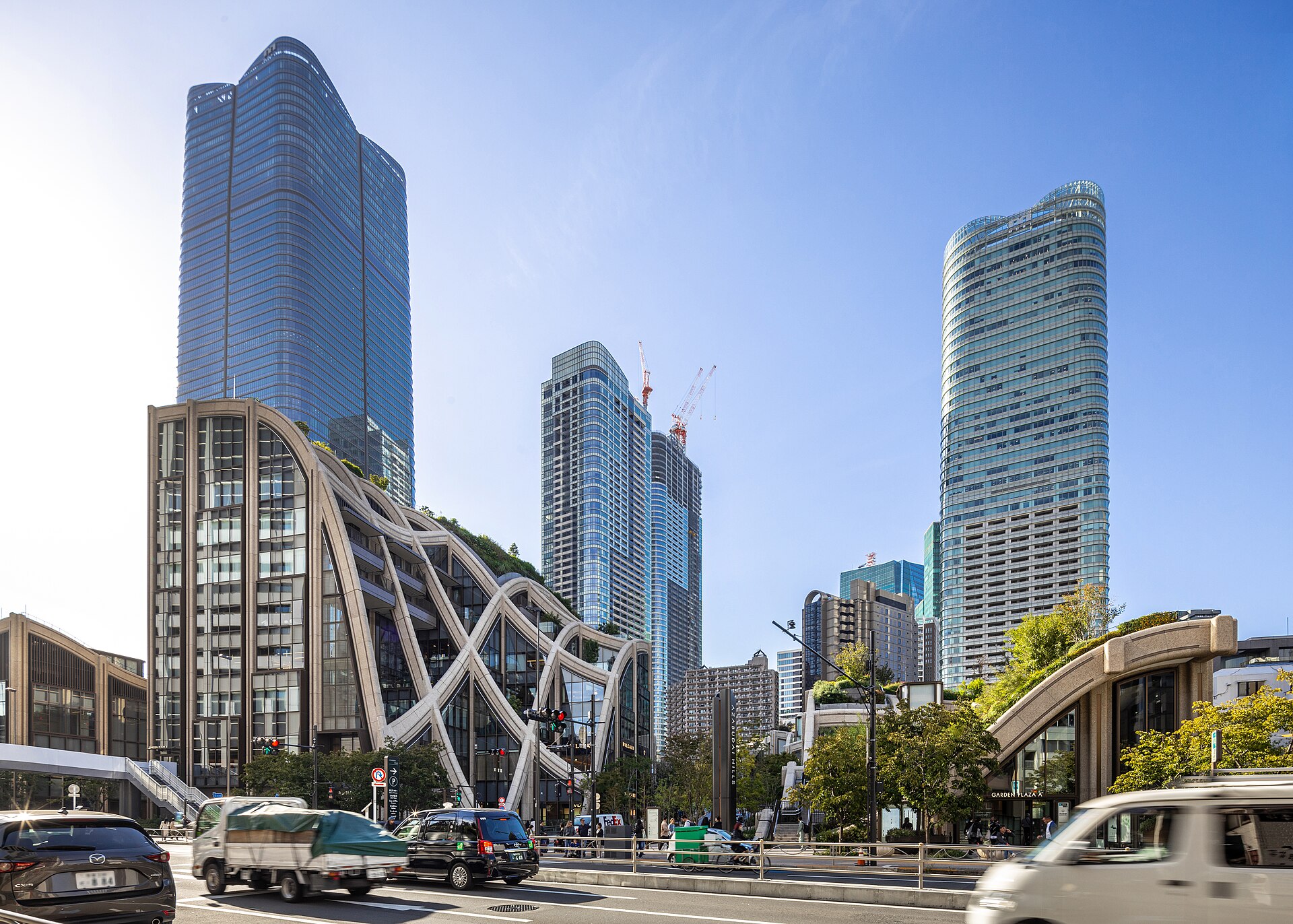
At 325.2 meters and 64 floors, this is the tallest completed building in Japan — a title it holds until the 385-meter Torch Tower opens near Tokyo Station in 2028, so see it while the superlative lasts. The tower’s profile is a long, continuous taper that flares gently at the base, like a plant stem meeting soil; Pelli Clarke & Partners drew the exterior, and the top floors house the Aman Residences, where apartments reportedly traded around two billion yen each. What to look for: stand close and watch how the curtain wall resolves at ground level — supertalls usually meet the street with a blunt podium, and this one works unusually hard to land softly.
3. The Heatherwick podium — walk on the roofs
This is the part I come back for. The low-rise buildings wear undulating pergola lattices that rise and dip like terraced hills, and you can walk over most of them — paths wander up planted slopes, across roof gardens, and back down to plaza level without ever clearly announcing whether you’re on a building or a hillside. Easy to walk past: it’s essentially one gridded system doing everything, morphing from roof structure to trellis to colonnade as it goes. Once you spot the grid, you can’t unsee it.
A confession: I have lost entire afternoons here trying to reverse-engineer the setting-out logic of those pergolas — where the module bends, where it breaks, where they clearly had to cheat. I still don’t have it fully figured out, which is probably why I keep coming back.
4. Central Green — the 6,000 m² argument
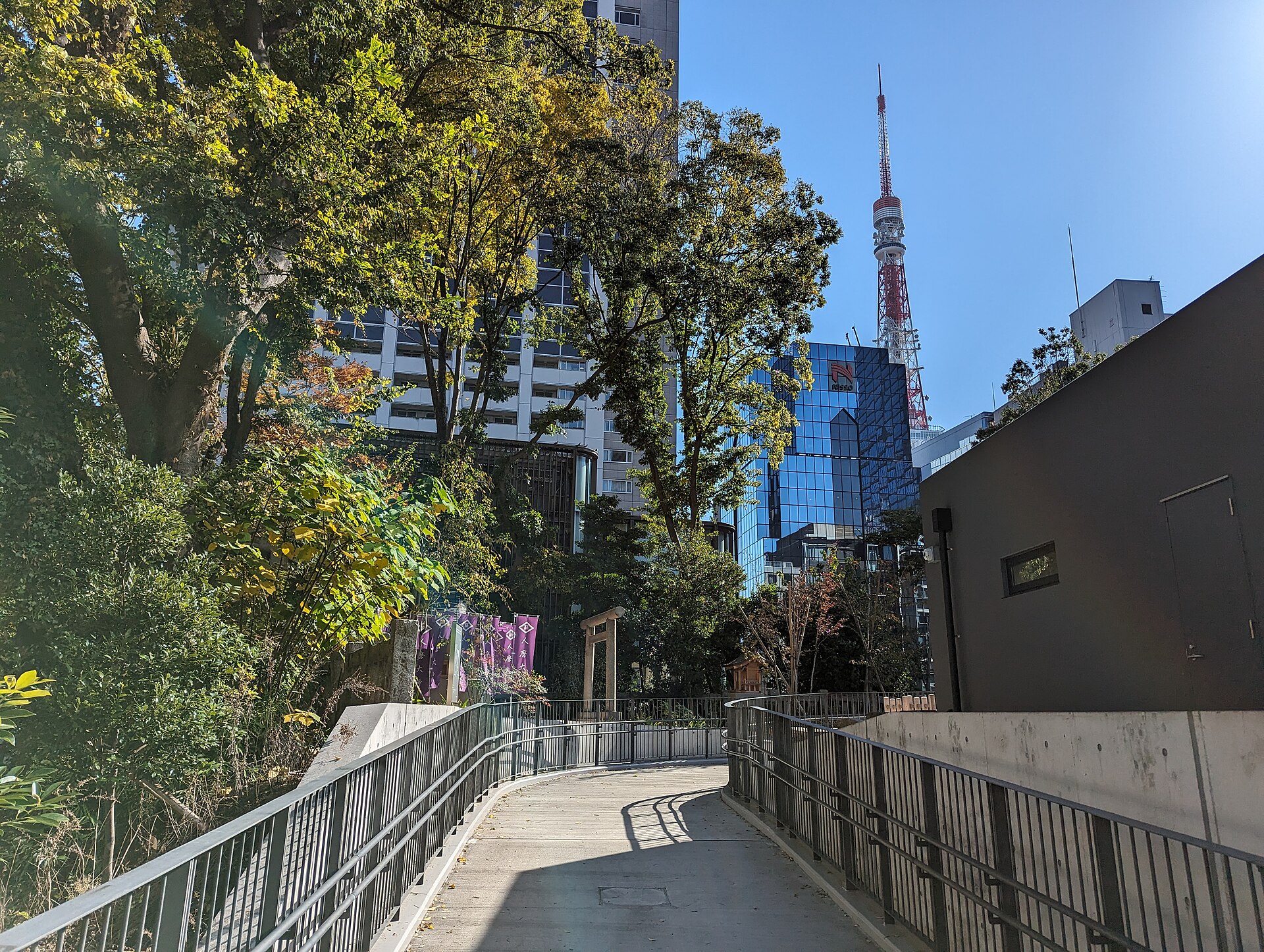
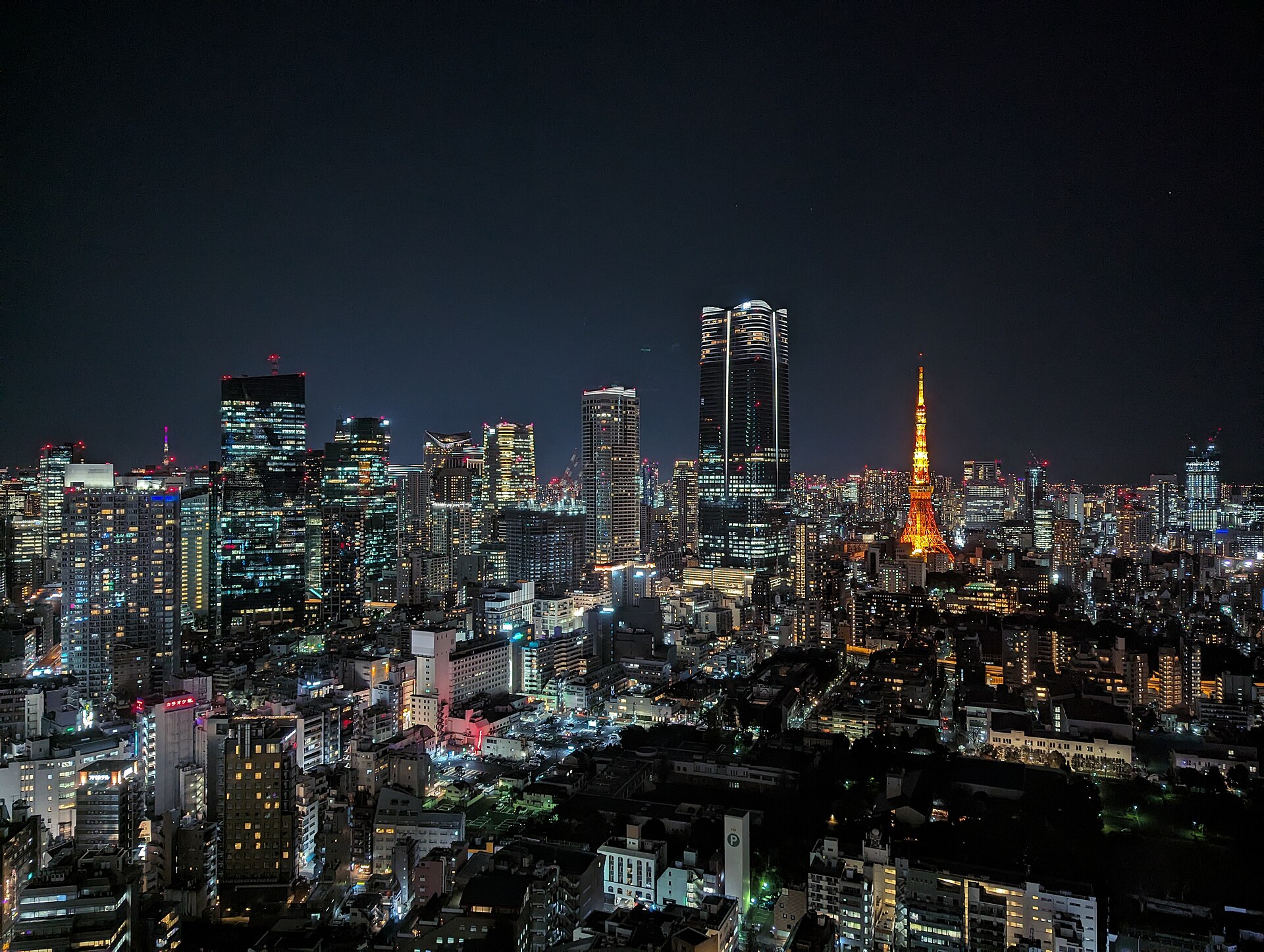
At the heart of the site is a lawn with Tokyo Tower rising directly behind it — the single best free photograph in this part of the city, especially at dusk when the tower lights come on. But pause on what you’re standing in: this was a dense, aging, low-rise neighborhood, and it took the developer thirty-five years of one-by-one negotiation with about 300 rights holders to assemble the land. The lawn is the point. A private company spent three and a half decades so that the middle of this project could be empty. What to look for: the orchard trees on the surrounding slopes — eleven fruit varieties, quietly radical in a district where land runs to millions of yen per square meter. Practical tip: the classic tower-over-the-lawn shot works best late afternoon into evening; mornings put the sun behind the tower.
5. Azabudai Hills Market — lunch in the basement
The B1 food hall is the practical anchor of the visit: proper fishmonger (Azabudai Yamayuki), produce grocers, delis, and casual stall dining — gyoza, yakitori, the works. It’s where the “village” idea stops being a marketing phrase and becomes people buying dinner. Practical tip: eat here rather than at street level; it’s better value, and the people-watching mix of construction-era locals, tower residents, and tourists is its own exhibit.
6. The view — the honest version
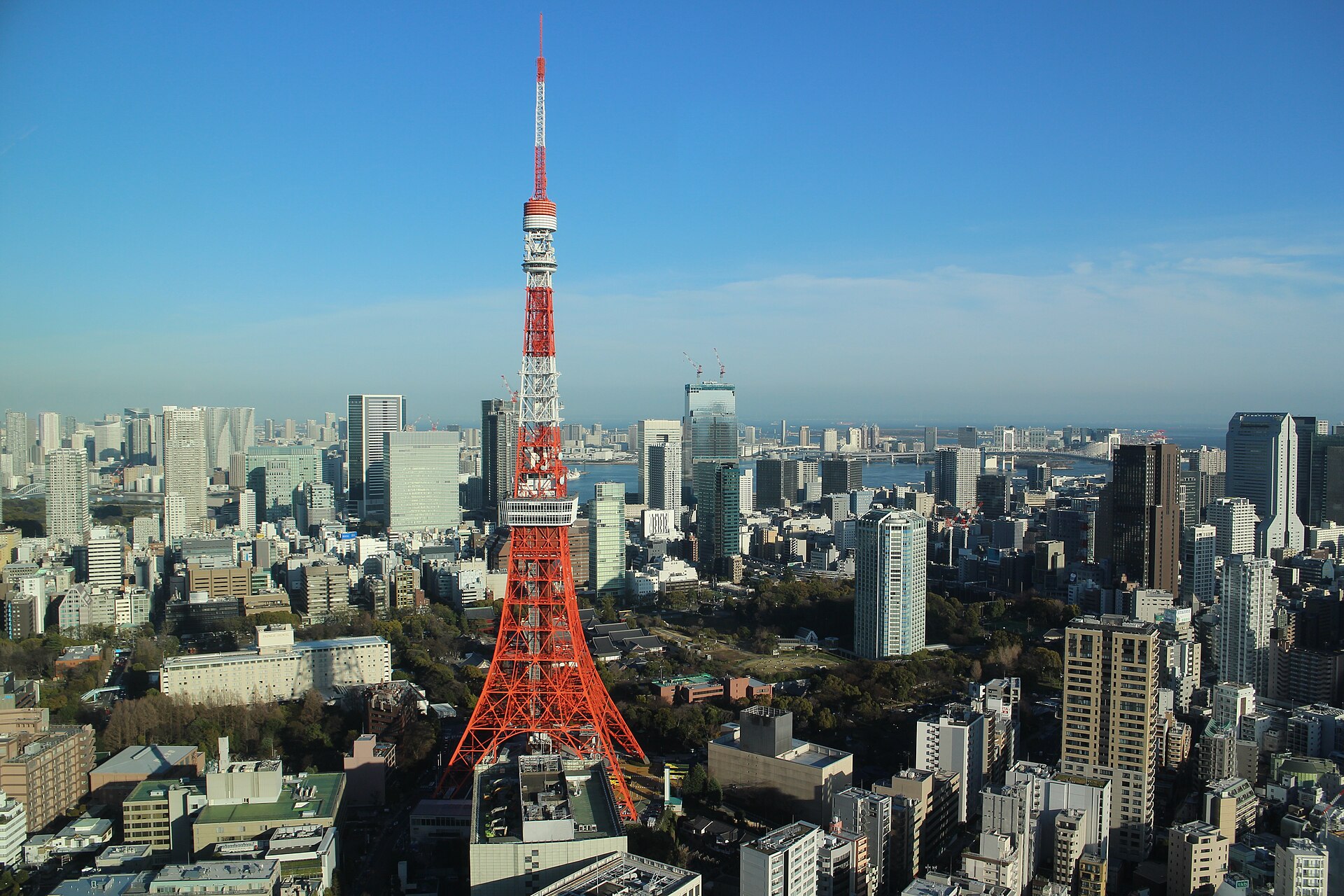
Here is the thing every 2023-era article gets wrong: the 33rd-floor Sky Lobby opened as a free observation space, and it was glorious, and then it was loved half to death. Since April 2024, access has been limited to office workers and customers of the Hills House venues upstairs. The reliable route for visitors now is Sky Room Cafe & Bar on the 34th floor: a ¥500 per-person cover charge (ages 6 and up) plus a one-drink minimum, cashless only. Call it roughly ¥1,000 a head for a seat 260 meters up, looking slightly down at the main deck of Tokyo Tower — which, for reference, is less than half the price of the city’s ticketed observatories. What to look for: on clear days, Mt. Fuji to the west; after dark, the tower fills your window like a lantern. Practical tip: the cafe occasionally closes for private events — check its schedule online before building your evening around it, and aim for golden hour.
7. teamLab Borderless — Garden Plaza B, B1
The digital art museum that made Odaiba famous relocated here in February 2024, and it belongs in this complex: a map-less labyrinth of 50-plus artworks that migrate between rooms, inside a district that is itself designed to disorient you pleasantly. Tickets are dynamically priced — adults roughly ¥3,800–¥4,800 depending on the date, teens ¥2,800, children ¥1,500 — and weekend slots sell out weeks ahead, so book 2–3 weeks early on the official site. Through October 8, 2026, a special exhibition has reopened the Light Sculpture – Flow hall with two new series, which is the best reason in a while to go even if you went in the Odaiba days.
Deciding between this and teamLab Planets in Toyosu is its own question — I’ve written a full comparison of the two venues, because the answer is less obvious than it looks.
8. Optional finale: sleep inside the masterplan
Janu Tokyo — the first hotel of Aman’s younger sister brand — opened here in March 2024, with 122 rooms and a spa that sprawls across some 4,000 m². If the nightly rate is not in this trip’s budget (it is rarely in mine), the bar and dining floors are open to civilians and make a fine last stop. And since the project’s completion in October 2025, the newest tower, Residence B, includes furnished serviced apartments for short stays — meaning for the first time, you can actually live inside the masterplan for a week rather than visiting it. Practical tip: for most travelers the smarter move is a hotel elsewhere and a full unhurried day here; see my design-hotel notes for alternatives that cost less than a small car.
The Route at a Glance
| # | Stop | Cost | Time needed |
|---|---|---|---|
| 1 | Arrival sequence from Kamiyacho | Free | 10 min |
| 2 | Mori JP Tower (exterior) | Free | 15 min |
| 3 | Heatherwick podium roof walk | Free | 40–60 min |
| 4 | Central Green + Tokyo Tower photo | Free | 20 min |
| 5 | Azabudai Hills Market (lunch) | Lunch budget | 40–60 min |
| 6 | Sky Room Cafe & Bar view (34F) | ~¥1,000/person | 45 min |
| 7 | teamLab Borderless | ¥3,800–¥4,800 | 2–3 hrs |
| 8 | Janu Tokyo bar (optional) | Drinks budget | 45 min |
Practical Notes
If you only have 90 minutes: arrival sequence, podium roofs, Central Green, and a fast Market browse. That’s the full architectural argument — garden city, walkable roofs, the lawn that took 35 years — without a single ticket.
Rainy day note: this is one of Tokyo’s best wet-weather destinations. You can arrive by metro, cross the district underground via Central Walk, eat in the Market, and spend three hours in teamLab without meaningfully getting rained on. The roof walk is worth doing even damp — the timber and planting arguably look better wet.
Pair it with: Tokyo Tower (10 minutes on foot, and the view of it from here is better than the view from it) or Roppongi Hills (15 minutes), Mori Building’s previous generation of the same idea — walking both in one afternoon is a masterclass in how one developer’s thinking evolved over twenty years.
Next up in this series: the question I get asked more than any other by visiting friends — Borderless or Planets? The full comparison is here.
This post contains affiliate links. See our full disclosure.