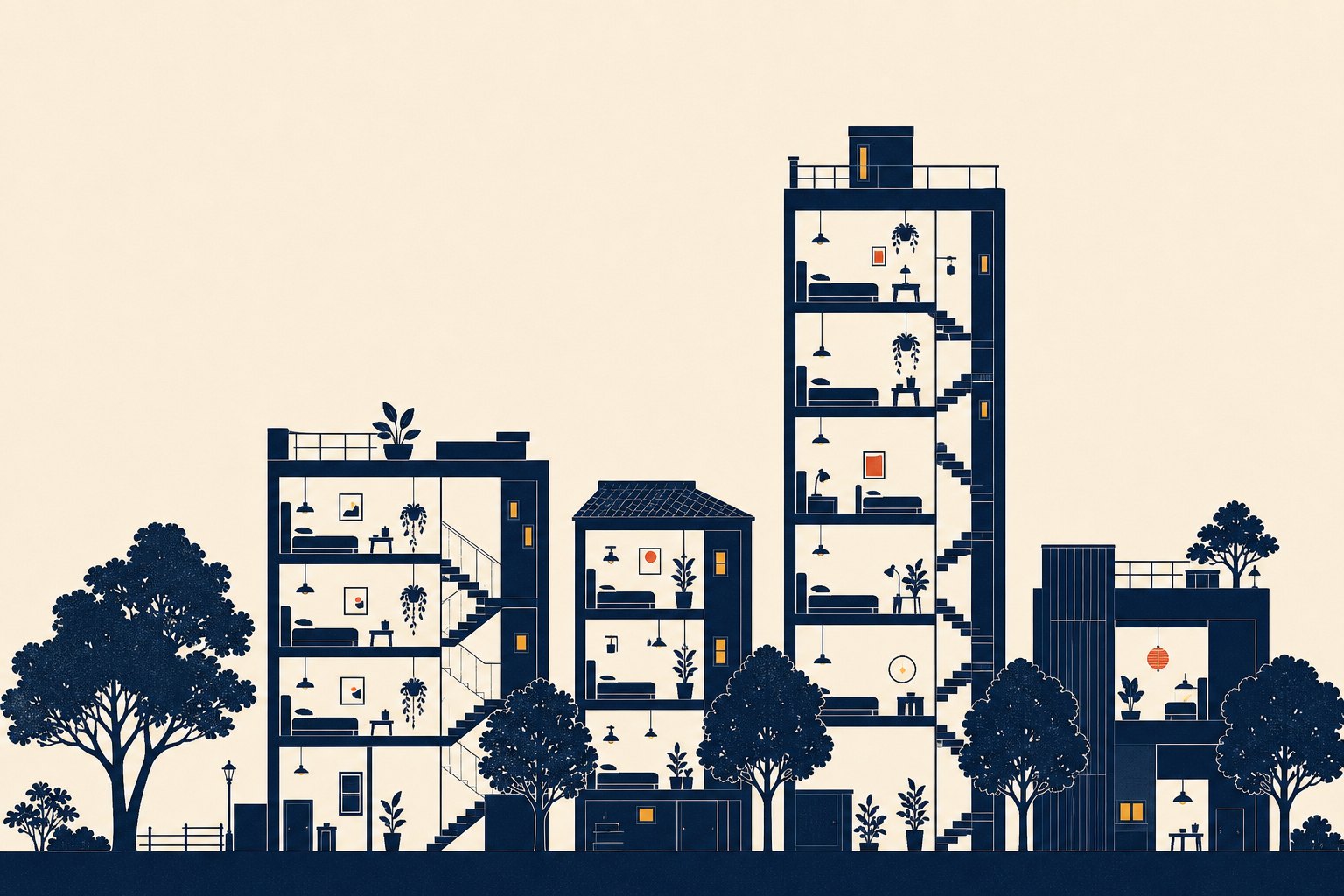
Tokyo has a strange gap in its hotel market, and it works in your favour.
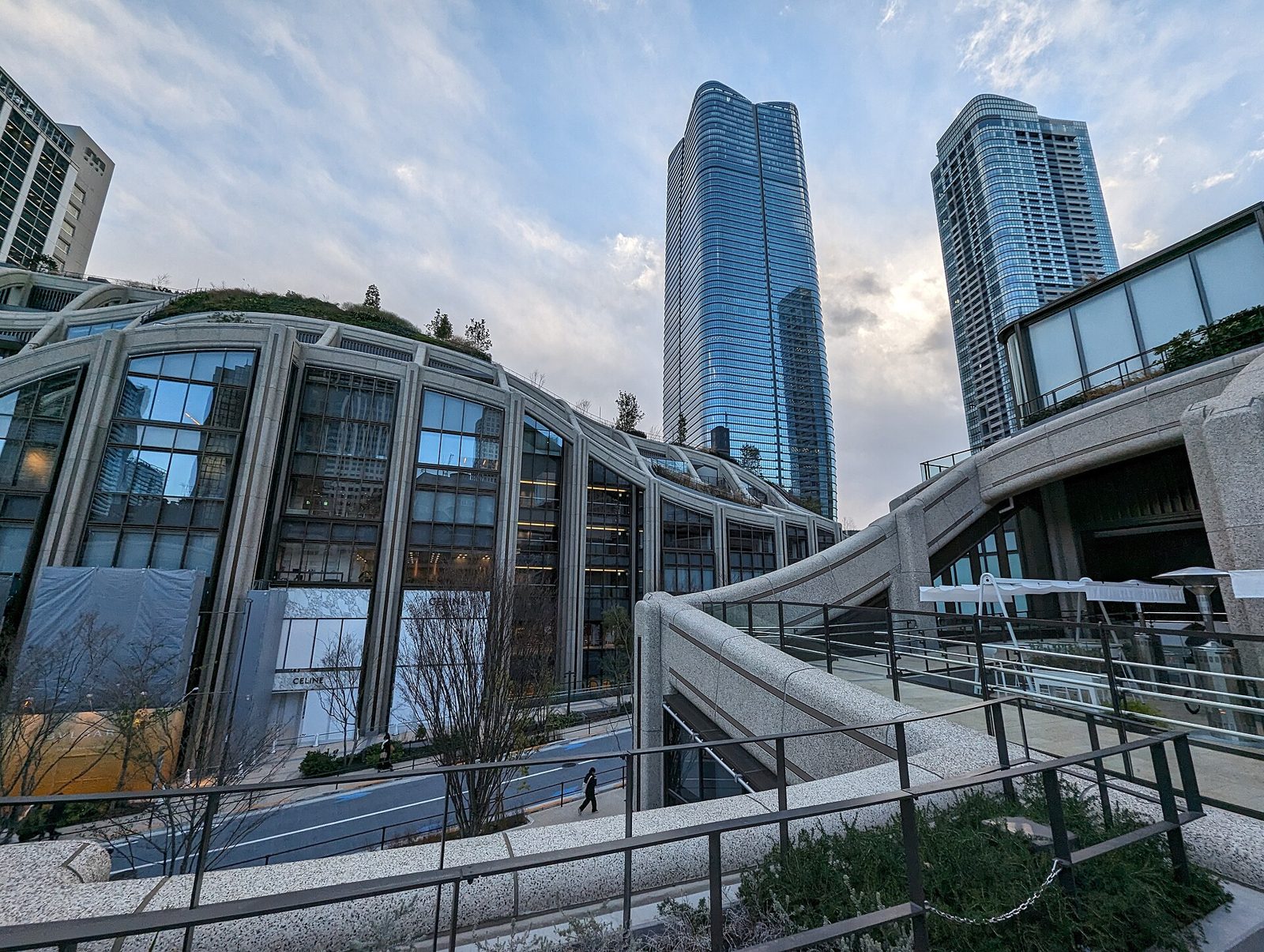
At the top, the city has more architecturally serious luxury than it knows what to do with — Aman occupying the top six floors of KPF’s Otemachi Tower with interiors by Kerry Hill; Janu, Aman’s younger sibling, filling the lower thirteen floors of a residential block at Azabudai Hills with interiors by Jean-Michel Gathy; Bellustar sitting on top of Kabukicho with interiors by Keiji Ashizawa and Norm Architects. All of it is very good. I have walked into Janu, and the sheer opulence of the place stopped me where I stood — 122 rooms starting at 55 square metres, a wellness floor of roughly 4,000 square metres with a 25-metre pool. I have never spent a night in any of them. They all start north of ¥100,000.
At the bottom, Tokyo has business hotels: clean, cheap, efficient, and designed with the enthusiasm of a filing cabinet.
The interesting stuff is in between, and it is genuinely cheap by international standards. I’m Micchi. I live in Tokyo and work in property development, and this is the list I send to friends in the industry who ask where to sleep. Every hotel below has either a named designer I can point you to, or a building with a story worth the walk to reception — and every one of them can be booked for two people for under ¥30,000 a night (about $183).
How I picked these
Three rules, applied honestly:
- A designer or a building. Either I can name the architect, or the building was something else first and the conversion is the point. “Nice lobby” doesn’t qualify.
- Under ¥30,000 for two, for one night. Not per person. Not the introductory rate on a room that never has availability.
- I checked the price myself. Every figure below came off a live booking engine or Rakuten Travel in late July 2026, for weeknights in September 2026, two adults, one room, room-only. Treat them as a realistic floor, not a quote — Tokyo rates swing hard by season, and September is a mild month.
Some links below are affiliate links: if you book through one, I earn a small commission and you pay exactly the same price. It does not affect which hotels made the list — I chose them before I had a single affiliate account. Full disclosure here.
Yen conversions use roughly ¥164 to the dollar, which is where it sat the week I wrote this — the weakest the yen has been in about forty years. If you’re coming from the US or Europe, the exchange rate is currently doing more for your travel budget than any hotel discount will, and it is worth paying attention to how you convert your money.
One note before the list: I’ve ordered these cheapest first, and the cheapest three are hostels with private rooms. If that word makes you flinch, skip to number four. But Tokyo’s design-led hostel scene is the most interesting thing that has happened to Japanese hospitality architecture in fifteen years, and you’d be missing it.
1. CITAN — Nihonbashi, from ¥8,000 (~$49)
The building: a seven-storey shirt wholesaler’s head office, gutted and rebuilt as a hostel by Backpackers Japan.
This is the cheapest bed on this list and, per yen, probably the best-designed. Backpackers Japan have quietly become one of the more thoughtful small developers in the city — they take tired mid-century commercial buildings in unfashionable districts and convert them with a consistency of material and detail that most hotel groups can’t manage at ten times the budget.
CITAN’s ground floor is Berth Coffee, an actual roastery that serves actual coffee to actual local office workers, which is the tell you want: the building is used by the neighbourhood, not just by guests. The basement is a bar and lounge that runs DJ and live nights on weekends. Rooms run from dormitory bunks to private twins and doubles.
The location — five minutes from Bakuroyokoyama on the Toei Shinjuku line, or Bakurocho on the JR — is nobody’s idea of a tourist centre, and that’s the appeal. This is the old textile wholesale quarter, a working part of Tokyo that most visitors never see, two stops from Nihonbashi proper.
Good to know: dorms and private rooms share the building, so check the room type carefully when you book. The private twin at ¥8,000 is the number to aim for.
2. Nui. HOSTEL & BAR LOUNGE — Kuramae, from ¥9,000 (~$55)
The building: a former toy manufacturer’s warehouse, converted whole, with a 4.5-metre ceiling in the ground-floor lounge.
Nui. is CITAN’s older sibling, and the lounge is the reason to come. Four and a half metres of ceiling height in a converted warehouse, a bar built from reclaimed timber, and a first floor that stays open late enough that it functions as Kuramae’s living room. If you have ever wondered what the phrase “adaptive reuse” means in practice, sit in this room for an hour.
Kuramae itself has become Tokyo’s craft district — leather workshops, small-batch coffee, a pencil shop that takes pencils extremely seriously — and it sits directly across the Sumida river from Asakusa, which means you can do the Senso-ji tourist obligation in the morning and be back somewhere quiet by lunch.
Good to know: it’s small and it fills up. Book earlier than you think you need to.
3. sequence SUIDOBASHI — Suidobashi, from ¥10,254 (~$63)
The building: new-build, and the best value-per-yen on this list.
sequence is Mitsui Fudosan’s lifestyle hotel brand, and Suidobashi is the unglamorous branch — which is exactly why it’s ¥10,254 while the Shibuya flagship is more than double that. You get the same design language: soft grey-green palette, oversized graphic wayfinding, a lobby that wants you to sit in it, self check-in that actually works in English at 2am.
Is it a masterpiece? No. Is it a properly art-directed hotel room for the price of a business hotel? Yes, and that combination barely exists anywhere else.
Suidobashi is a fifteen-minute train ride from most places you want to be, next to Tokyo Dome. Not central, not remote.
Good to know: if you’re choosing between the two sequence properties on this list, Suidobashi is the value play and Miyashita Park (number eight) is the experience.
4. toggle hotel suidobashi — Suidobashi, from ¥15,670 (~$96)
The architects: Klein Dytham architecture, 2021.
This is the first hotel on the list I would recommend on architectural grounds alone.
Astrid Klein and Mark Dytham have been building in Tokyo since 1991 and have a very specific talent: making buildings that are playful without being stupid. toggle sits on a triangular sliver of land where the Shuto Expressway, the Chuo line and the Kanda river all converge — one of those impossible Tokyo sites that exists because the infrastructure got there first. The building takes the shape of the leftover plot and runs with it.
The idea in the name is carried through the whole thing: every floor is split into two colours, meeting in a horizontal line that runs around the façade, and every room is a two-tone pair. Sun yellow over slate. Pink over green. It should be unbearable. It isn’t, because the colours are chosen by people who know what they’re doing, and because the ninth-floor lounge gives you a view straight down the elevated expressway that is worth more than any hotel bar in Ginza.
Good to know: higher floors push past ¥30,000. The river-and-expressway setting is spectacular to look at, and I’d be surprised if it were silent — if you sleep lightly, ask what your room faces before you book.
5. BnA_WALL — Nihonbashi, from ¥21,680 (~$132)
The architects: Hisao Morita Architects for the conversion; twenty-three artists and art directors for the twenty-six rooms.
Most “art hotels” mean framed prints. BnA_WALL means the artist built the room — floor, wall, ceiling, furniture, the lot — and you are sleeping inside the work.
The building was a Nishijin textile company’s Tokyo head office before BnA gutted it in 2021. The lobby holds a large mural that gets painted over and remade; the basement is a working studio where artists in residence actually work. Each guest room is credited to its maker, and they range from disciplined to genuinely deranged. YOSHIROTTEN’s room is not the same experience as SIDE CORE’s room.
This is the one on the list I’d pick if you only have one night and you want the night itself to be the thing you remember.
Good to know: rooms vary from 13㎡ to 28㎡ and the aesthetics vary far more than that. Look at the individual room pages before you book — with this hotel, “a room” is not a category, it’s a specific object. Kodenmacho station, five minutes’ walk.
6. MUSTARD HOTEL SHIMOKITAZAWA — Shimokitazawa, from ¥21,760 (~$133)
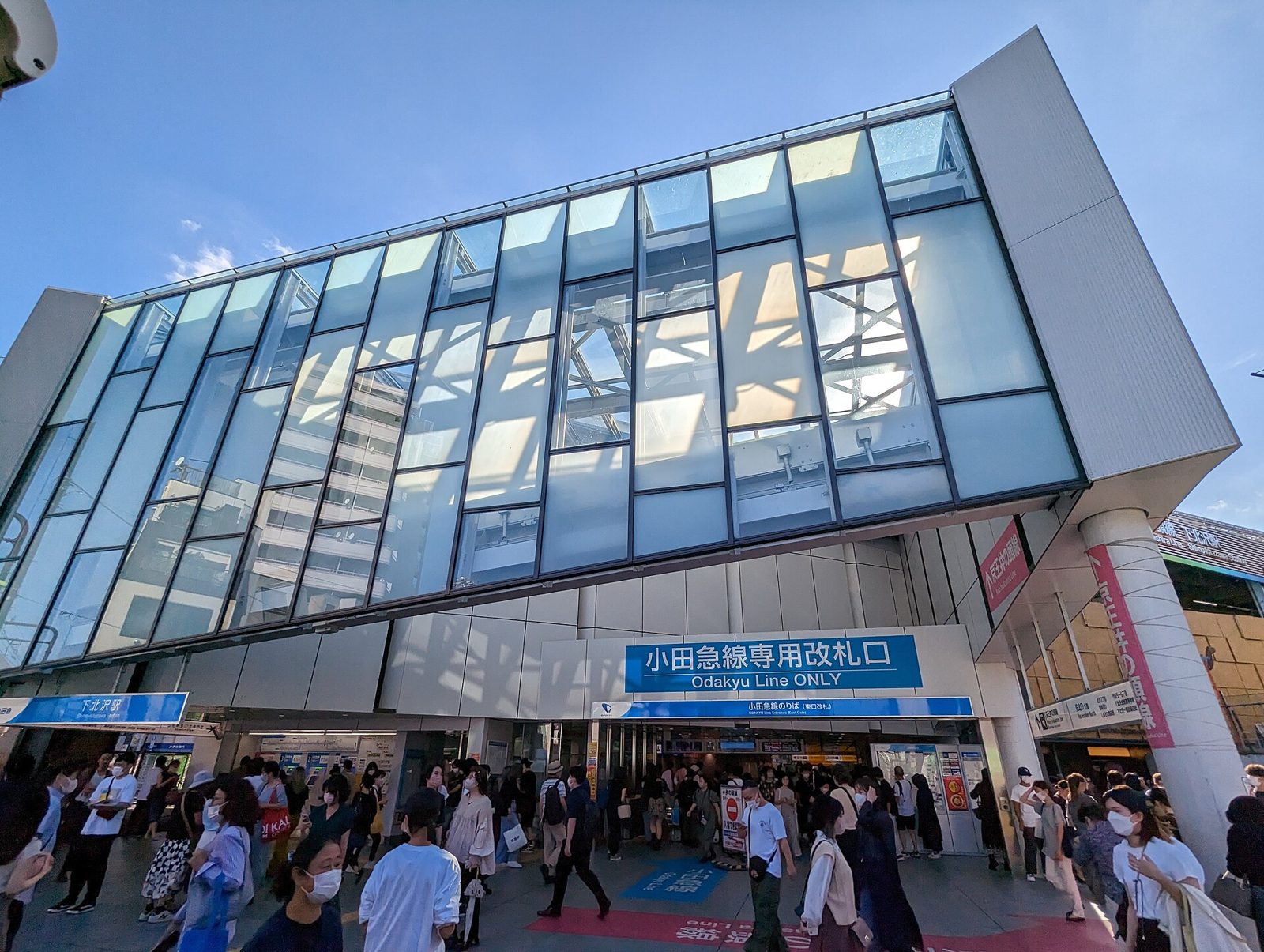
The building: new-build, part of the Shimokita Senrogai redevelopment.
Worth staying at for the urban design rather than the hotel. When Odakyu put its railway line underground here, it left a 1.7-kilometre strip of land through the middle of Shimokitazawa — and instead of selling it to a tower developer, they built a low, loose, mostly two-storey ribbon of shops, gardens, a bookshop, a student dormitory and this hotel.
It is the most convincing counter-argument in Tokyo to the Roppongi/Azabudai model of city-making, and if you’ve read my Azabudai Hills guide, staying here is how you see the other side of that argument. Same city, same decade, opposite conclusion about what density should feel like.
Shimokitazawa is also the best vintage clothing in Tokyo and a very good place to be at 11pm.
Good to know: the cheap rooms are a small share of the inventory and the price climbs steeply above them — I’ve seen the same hotel quote ¥48,000 (~$293) on a busy weekend.
7. HAMACHO HOTEL TOKYO — Nihonbashi Hamacho, from ¥23,000 (~$140)
The architects: Matsuda Hirata Sekkei for the building, UDS and the range design for the interiors. Good Design Award 2019.
The clever move here is on the balconies: real trees, some of them five metres tall, planted in the building’s own terraces so that a large share of the rooms look out into foliage rather than into the neighbours. In a city this dense, buying yourself a view of a tree is a serious design decision, not a garnish.
The exterior is board-formed concrete — timber grain pressed into the surface — which does the unfashionable thing of tying a fifteen-storey building to the low wooden streets of Hamacho around it. The hotel was built as the centrepiece of a long-term district revitalisation by the landowner, which is why the ground floor is a bakery and a chocolate shop that the neighbourhood actually uses.
Good to know: the entry rooms are 15㎡ — Tokyo-normal, but small if you’re coming from North America. This is the most conventionally comfortable hotel on the list, if that’s what you want.
8. sequence MIYASHITA PARK — Shibuya, from ¥23,700 (~$145)
The interiors: Puddle Inc. Opened 2020 as part of the Miyashita Park redevelopment.
Miyashita Park is the building everyone argues about: a public park lifted onto the roof of a shopping mall, with a hotel stacked on the end of it, opened in 2020. It replaced a ground-level park that had been home to a long-standing homeless community — the evictions, and Nike’s purchase of the park’s naming rights back in 2008, drew international protest at the time. It is a genuinely difficult project, and you should read about that history before you form an opinion about the architecture.
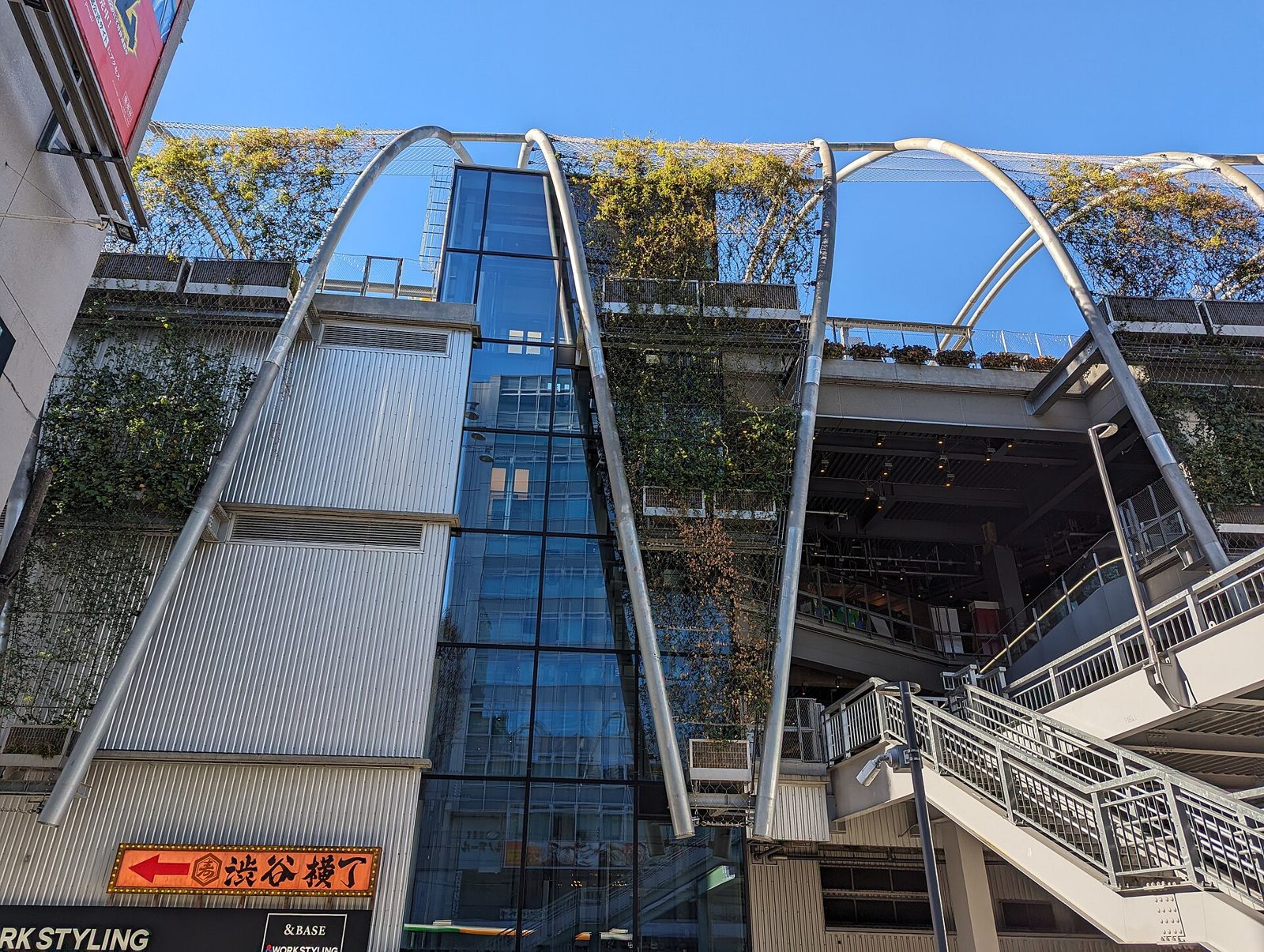
As a hotel, it is very good. Puddle’s interiors are warmer and more tactile than the developer-hotel norm, the rooftop bar SOAK on the top floor, the eighteenth, has the best available view of the Shibuya Scramble roofscape, and you are a three-minute walk from Shibuya station — which, on a first trip to Tokyo, is worth real money.
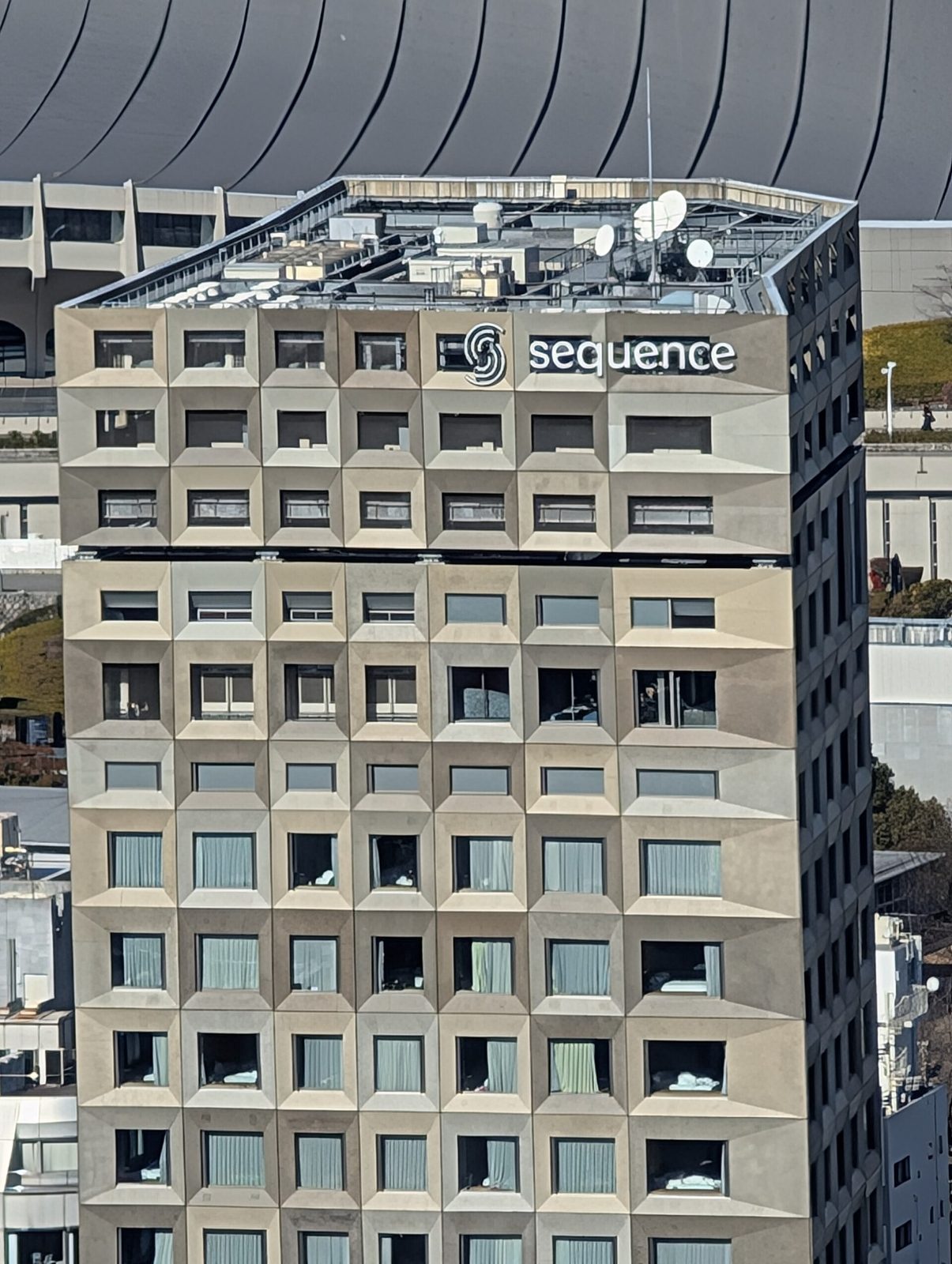
If you’re doing my Omotesando architecture walk, this is the hotel to do it from. You can start the route on foot from the front door.
Good to know: ¥23,700 is a September weeknight. Weekends and peak season go over ¥30,000 quickly.
9. all day place shibuya — Shibuya, from ¥25,600 (~$156)
The architects: DDAA / Daisuke Motogi.
Motogi is one of the more interesting designers working in Tokyo right now — his practice runs a research arm alongside the studio, and the work tends to be about taking a standard object and questioning why it’s standard. In a hotel, that means the ground floor isn’t a lobby with a coffee machine in the corner; it’s a Mikkeller craft beer bar and bottle kiosk with a door onto the street, and the hotel’s guests are a minority of the people in it.
Rooms are stripped back and precisely detailed — exposed structure, plywood, a lot of thought about where you put things down. It sits in Shibuya 1-chome on the Miyamasuzaka side, a minute from the Metro’s B1 exit and five from the JR gates — about as central as Tokyo gets without being inside the station.
Good to know: only the entry-grade Double and Compact rooms sit under ¥30,000. Corner Kings run to ¥46,000 (~$281).
10. HOTEL RYUMEIKAN TOKYO — Tokyo Station, from ¥28,500 (~$174)
The building: Yaesu Ryumeikan Building, designed and built by Obayashi, 2009. The inn itself dates to 1909.
This one is on the list for the lineage rather than a signature. The Ryumeikan company started in Kanda in 1899; the direct ancestor of this hotel opened by Gofukubashi in 1909, burned down in the Great Kanto Earthquake, burned down again in the war, was rebuilt, went high-rise in 1963, and was rebuilt once more in 2009. Transoms and fittings from the old inn were kept and reused as artwork in the current rooms.
That is a hundred and twenty years of a family business continuously rebuilding on roughly the same block, which is a very Tokyo kind of continuity — nothing old survives, and yet the thing itself never stops. The rooms are a competent Japanese-Western hybrid rather than a design statement, and the hotel is a three-minute walk from Tokyo Station, which makes it the obvious choice for your first or last night if you’re taking the Shinkansen. If you would rather sort the rail tickets before you arrive, Klook handles rail passes and attraction tickets with an English checkout.
Good to know: ¥28,500 is the room-only rate and it’s the tightest fit on this list. Check dates carefully.
Bonus, for solo travellers: 9h nine hours Akasaka — from ¥4,100 (~$25) per person
The architect: Akihiko Hirata, 2018. Brand direction by product designer Fumie Shibata.
I’m putting this outside the main list because you cannot share a room — 9h separates men’s and women’s floors completely, down to separate elevators — so it fails the “two people, one room” test on principle.
But if you’re travelling alone and you care about architecture, spend one night here. The capsule hotel is Japan’s most exportable original building type, invented by Kisho Kurokawa in 1979 in the wake of the Nakagin Capsule Tower, and 9h is what happens when the type is taken seriously by a good architect and a good product designer instead of being left to rot in Kabukicho. Hirata’s Akasaka building pushes the circulation towards the street so that you feel embedded in the block rather than sealed off from it. Shibata designed the pod, the bedding, the amenity set — the whole object.
Four thousand yen for a night inside a properly designed piece of Japanese architectural history is the best-value experience in this entire article.
What I left off, and why
Half the “affordable Tokyo design hotel” lists you’ll find were written years ago and never rechecked. Here’s what I found when I checked, in July 2026:
- MUJI HOTEL GINZA — still open, still lovely, and now ¥56,000 (~$342) for two. It was a bargain in 2019. It isn’t one now, and every listicle still calling it affordable is repeating a six-year-old price.
- K5 — the 1923 former Dai-Ichi Bank annexe in Kabutocho, converted by Claesson Koivisto Rune. Architecturally the best building I looked at for this piece, and ¥56,610 (~$346) for the smallest room. If your budget stretches, go. It just isn’t this article.
- TRUNK(HOTEL) CAT STREET — around ¥63,000 (~$385).
- Bellustar Tokyo — Ashizawa and Norm Architects on top of Kabukicho Tower, ¥105,000 (~$641).
- Hotel Koe Tokyo — the SUPPOSE DESIGN OFFICE hotel-bakery-store hybrid in Shibuya. Closed in January 2022. It is still listed as bookable on several international travel sites. It does not exist.
- Kaisu, Akasaka — a guesthouse in a converted ryotei restaurant, and a lovely story. Its domain has lapsed, its booking engine returns no availability on any date I tried, and its last review is from 2020. I could not confirm it is still operating, so I’m not sending you there.
Three things worth knowing before you book
Book direct-adjacent, not direct-only. Several of these — BnA_WALL, HAMACHO, Ryumeikan, 9h — sell their cheapest inventory through their own booking engines, which are in Japanese first and English second. It’s worth comparing both ways before you commit.
Tokyo’s accommodation tax is about to change. Right now it’s a flat surcharge: ¥100 per person per night if your room works out to ¥10,000–14,999 per person, ¥200 if it’s ¥15,000 or more, and nothing below ¥10,000. From 1 April 2027 Tokyo switches to a flat 3% of the room rate, with an exemption below ¥13,000 per person per night and no cap. On a ¥28,000 room for two, that’s ¥200 today and roughly ¥840 (~$5) after the change. Not ruinous — just don’t be surprised at checkout.
September and late January are the cheap weeks. Every price in this article is a September weeknight. Cherry blossom season and the autumn foliage weeks can add 50% or more to the same room, and Golden Week (late April to early May) is worse.
Where to go next
If you’re building a trip around this list: the Omotesando architecture walk pairs with Shibuya (sequence Miyashita Park, all day place), Azabudai Hills is a short ride from anywhere central, and if you’re deciding between the two teamLab venues, I’ve compared them here.
And whichever hotel you pick, sort out your data before you land — Tokyo’s free wifi is a myth that mostly exists in convenience stores. Airalo sells a Japan eSIM you can buy before you fly and switch on the moment you land, which is one less queue at the airport.
Prices in this article were checked in late July 2026 for weeknights in September 2026, two adults, one room, room-only, on the hotels’ own booking engines and Rakuten Travel. Rates move. I’ll recheck this list twice a year — if you find something that’s drifted, tell me.